Word Choice
It's Lit Fest Season in Kolkata

On a recent Monday night, I was sitting on the roof of Kolkata’s beloved Seagull Books, listening to the French author Cecile Wajsbrot and her American translator, Tess Lewis. They were discussing the process of bringing into the world Wajsbrot’s new novel, Nevermore, about an unnamed woman translating Virginia Woolf’s To The Lighthouse.
In Wajsbrot’s original, the character translates Woolf’s English into (and reflects on cadence, syllables, and other things in) French. But Lewis’ translation required the lyric, often metacognitive acrobatics of adhering to the character’s translation, through French, back into English, since To The Lighthouse is, of course, an English novel. The story also takes place in Dresden, where the woman has gone to mourn the death of a friend as well as to undertake the work of translation. The novel is a quiet reflection on language, impermanence, and the jagged afterlife of war. Or rather, the book gives voices to inseparability of it all: the obstacles of trying to understand and be understood in the midst of ordinary sorrow and the darkness of fascism that was never really in the past.
It is, in other words, a timely novel.
I’ve been gutted, of late, by the rise of authoritarianism around the world. In the midst of so much uncertainty and cruelty, discussions around literary translation and the different implications of a seemingly simple phrase can appear if not indulgent, then still time-consuming. On the first page of the novel, for instance, the narrator considers even just Woolf’s title: “.. a title translated in French as La Promenade au phare, a stroll to the lighthouse. The movement of the word to is implicit in the word promenade. But can you call taking a boat to a lighthouse a stroll? Aren’t strolls, by definition taken on solid ground?”
As the author and the translator spoke and read, guiding us through their experiences of grammar and word choice, what became palpable was not only their insight, but also the buoying effect of our collective attention on each word - those chosen and those considered. On the effort of trying to get it right.
“[T]he writer is written by her language,” Gayatri Chakravorty Spivak established in her 1992 essay “The Politics of Translation.” “Yet language is not everything,” she continued. “It is only a vital clue to where the self loses its boundaries.”
I’ve been thinking about that tension a lot these last few weeks - not only in terms of linguistic translation, on and off the page, but also in terms of how we lose and find ourselves in reading. Books do steady us. And it’s lit fest season in Kolkata, so I’ve been reading a lot.
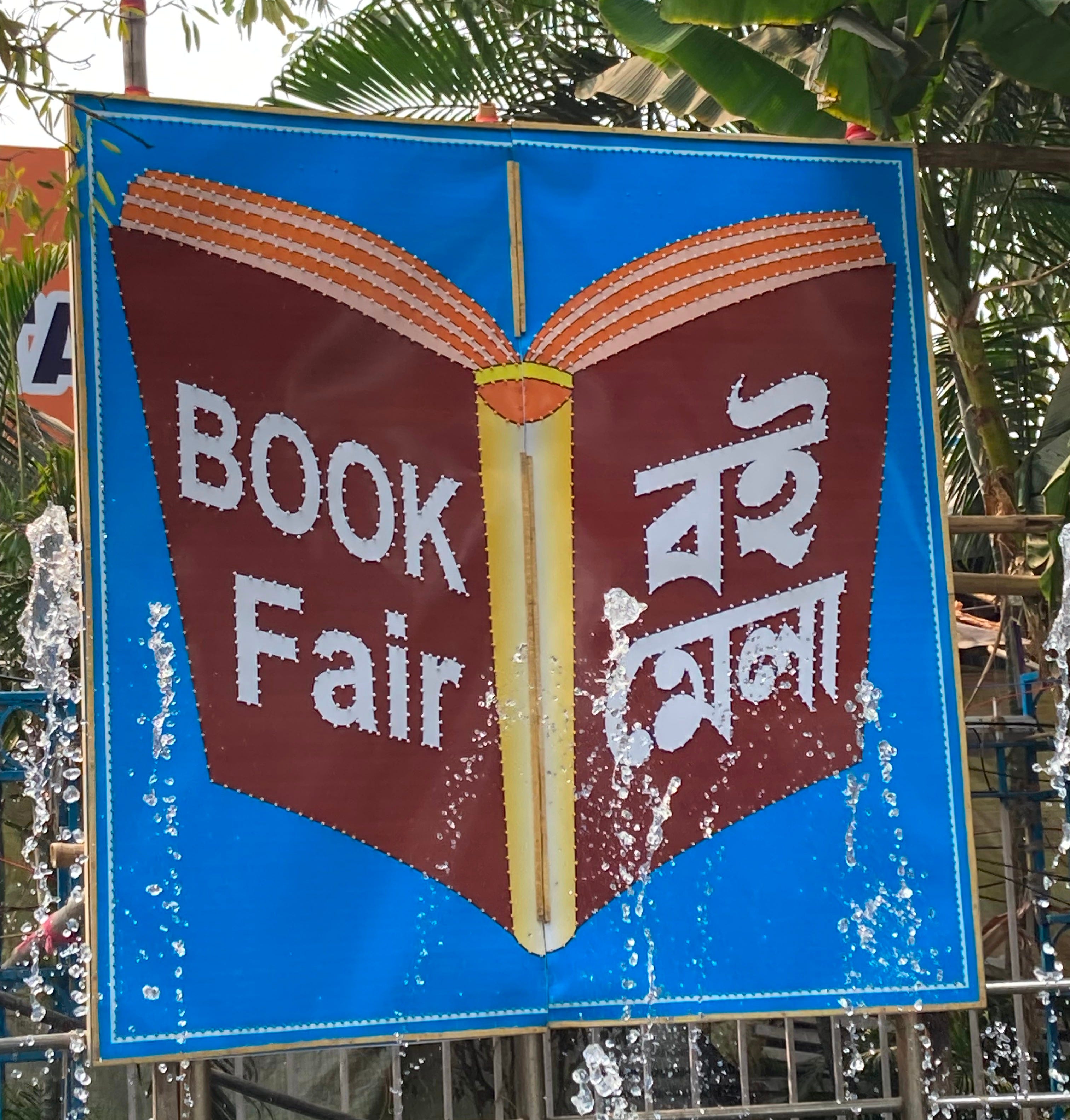
The day after that night on the roof, the 48th International Kolkata Book Fair, or boi mela, officially opened. One of the most celebrated events in Kolkata after Durga Puja, the IKBF is the biggest book festival in the world, and it’s open to everyone. The last several years have seen over 2 million visitors, over ten days, as big, commercial publishing houses, independent publishers, university presses, research institutes, editors, translators, little magazine creators, and various countries sell all kinds of books, pamphlets, and zines, in English, Bangla, Hindi, and other regional Indian languages.
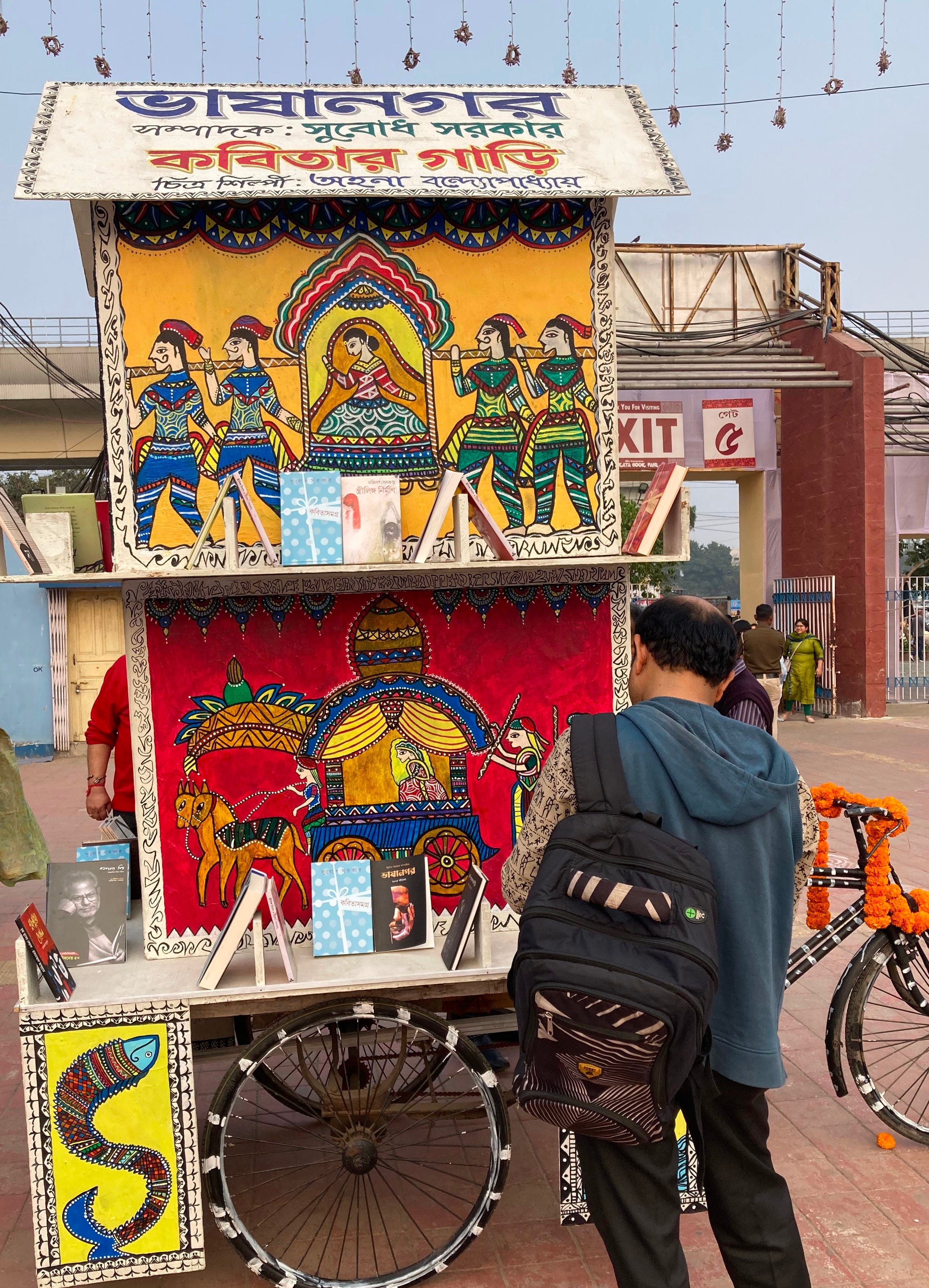
In a big, dusty fair grounds, people eat fried fish, drink chai and masala Pepsi, and meander through hundreds book stalls, lugging their hauls and swapping new book recommendations and old book discoveries. The later in the day, the bigger the crowd.
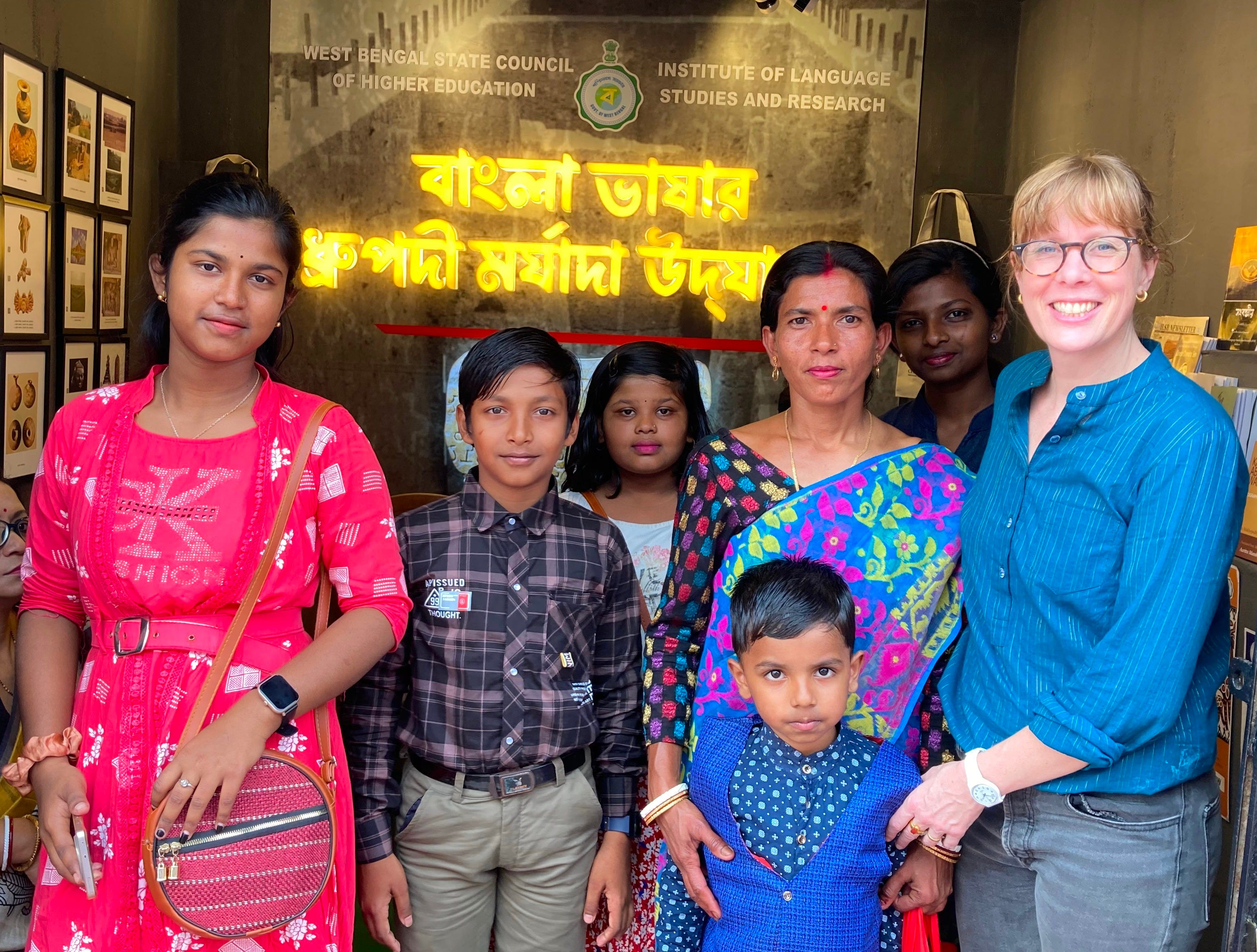
In one of my favorite Boi Mela moments this year, several of the people from the jute farming village where our friend Abhijit is shooting his film came to the book fair, traveling several hours to the city. As I briefly described in a previous newsletter, Abhijit is making a movie based on a story by the Bengali writer and farmer Ansaruddin. Several of the girls helping to shoot the film, along with the wife of the lead actor, came to say hi while I was at the stall of my host institution, the Institute of Language Studies and Research, which has also held events, in Bangla, celebrating Ansaruddin’s work. It all felt very full-circle; the stories between life and the page moving back and forth, simultaneously.
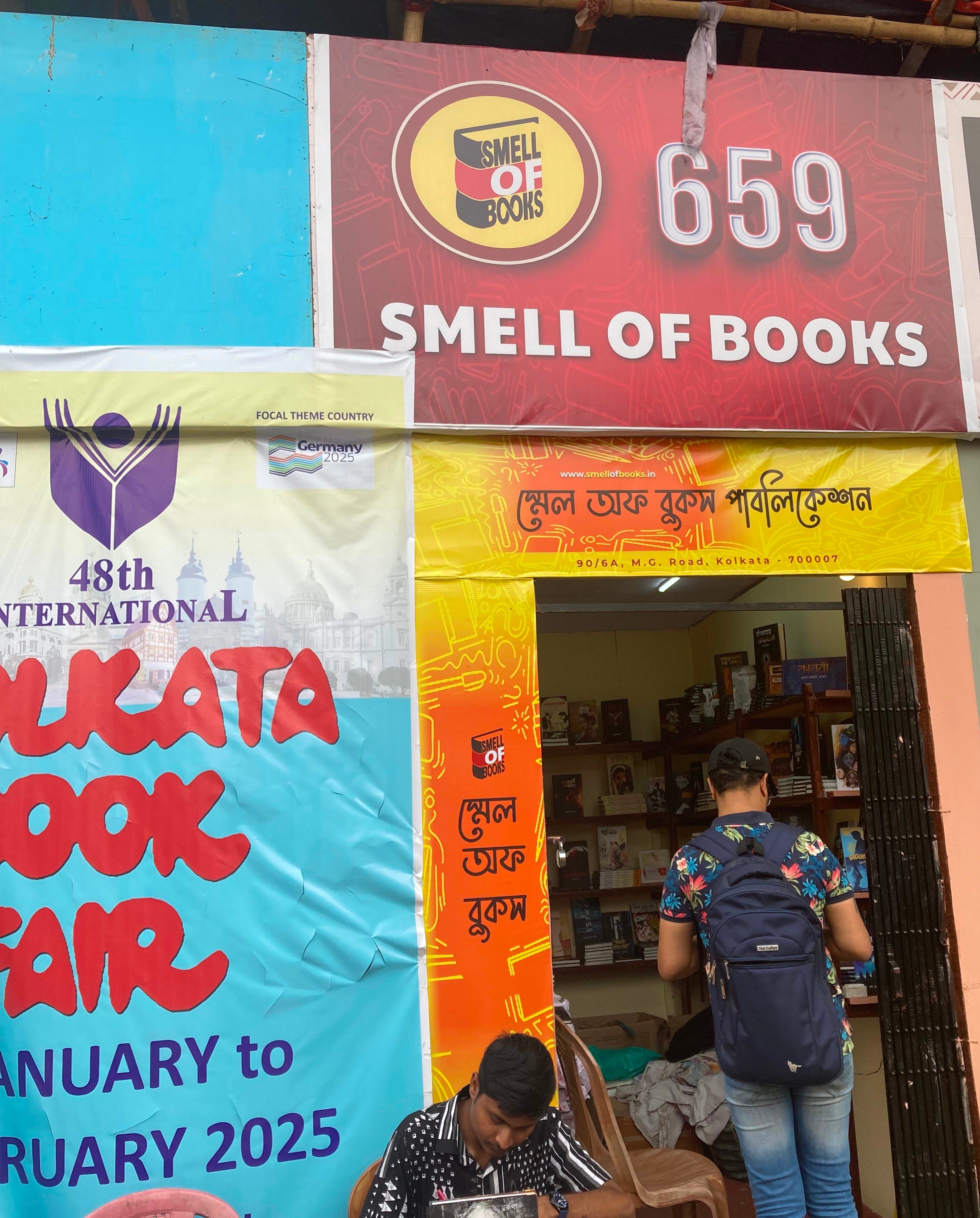
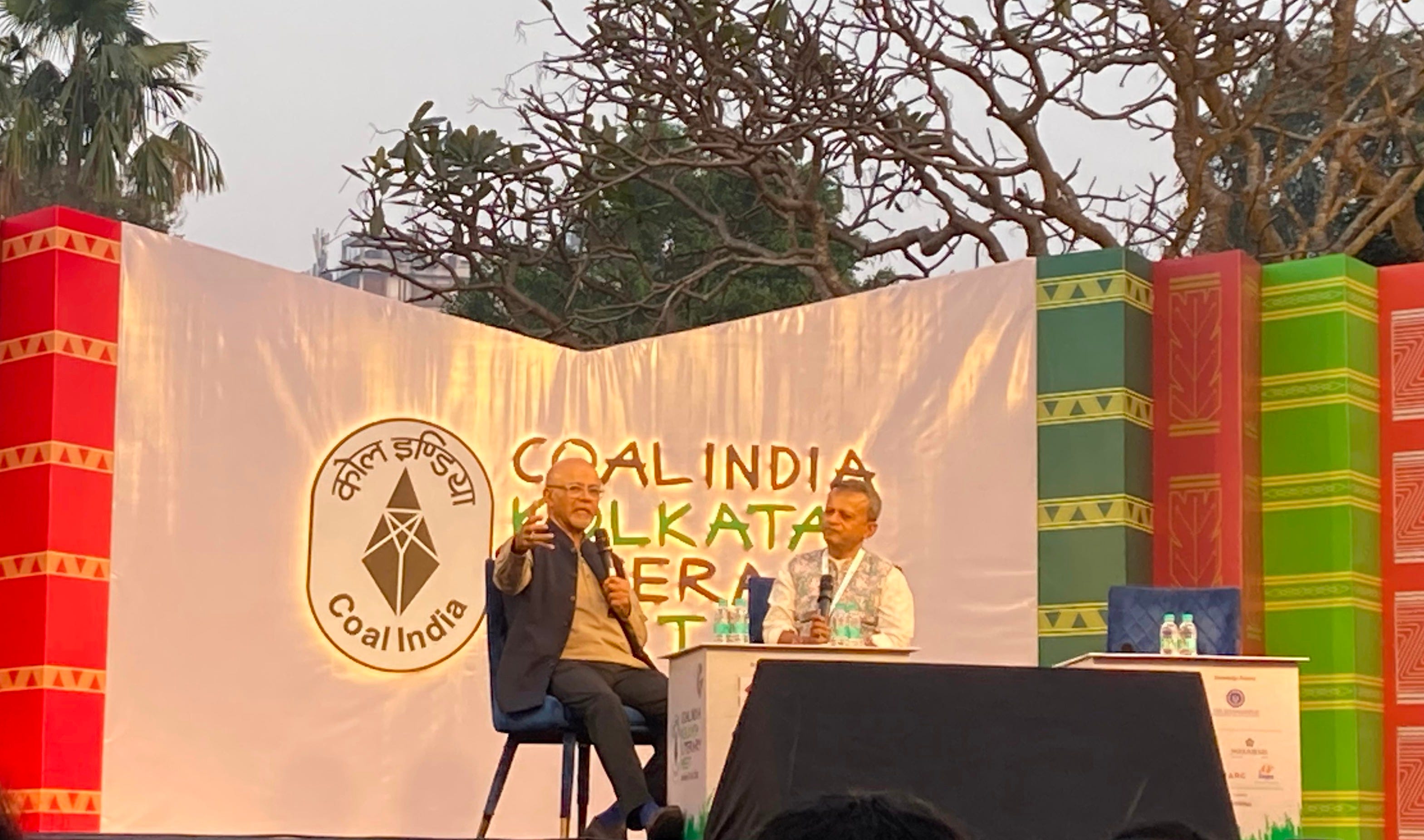
Before the Book Fair, Kolkata also hosted a series of literary festivals, including the Kolkata LitMeet. One of my favorite conversations there was between local writer Sandip Roy and Abraham Verghese, the renowned physician and author. Verghese was born to South Indian parents in Ethiopia and began his medical training there, but when the civil war started in the mid-1970s, he had to leave.
Arriving in the U.S., Verghese could not continue his medical training; the systems were too different and it would have required him to go restart his entire education at an undergraduate level. Though he eventually did graduate from Madras Medical College, in India, Verghese spoke with humility, in January, about the fear of leaving Ethiopia and the bewilderment of arriving in the U.S., where, unable to study, he worked for over a year as a hospital orderly, changing sheets and bedpans and gaining, it would appear, tremendous patience and compassion, traits that are as evident in his prose as I am sure they are in his practice. Another form of translation. Another reminder that how we care for one another is also where the ‘self loses its boundaries.’
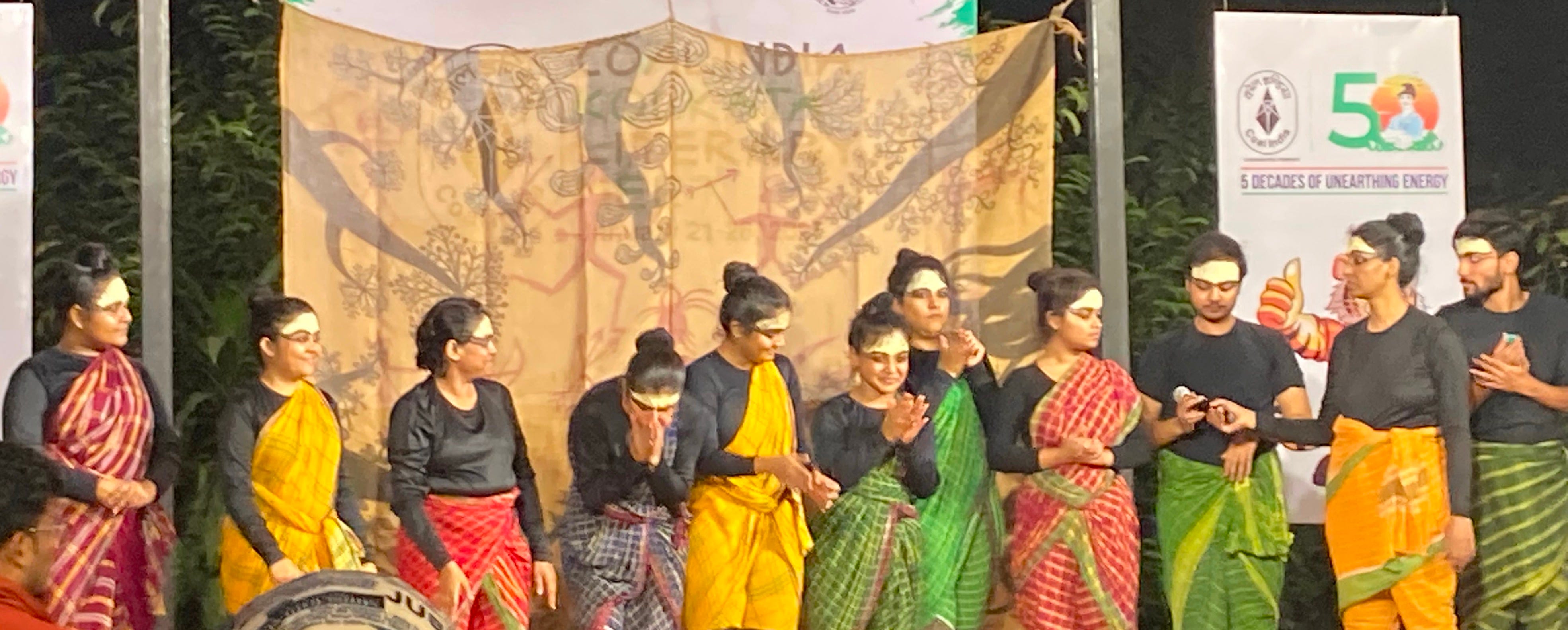
Additionally, at the LitMeet, I attended a performance, in Bangla, by Samuho, a queer/ women’s theatre collective. Group theater in India was integral to the freedom struggle and, in Bengal especially, remains a practice of resistance, not only creating stories of empowerment and defiance, but also upending narrative expectations of a single main character or individual story.
Despite lots of book research, this was my first experience of Bengali group theatre. The production, অথ হিড়িম্বা কথা (Atho Hidimba Kotha), reclaims and reimagines Hidimba, a demoness from the Mahabharata. Although I followed little of the dialogue, I still felt the current between the audience and the performers. I could hear everyone listening.
Kolkata’s rich literary culture is not only a tradition upheld from the past, but an on-going, ever-evolving present. Each of these encounters and the countless other conversations, readings, book talks, translations, theatre performances, and exchanges that have been taking place across the city these last few weeks have reminded me why I’m here and fortified me for what’s to come. Or at least for today.